 EN
EN

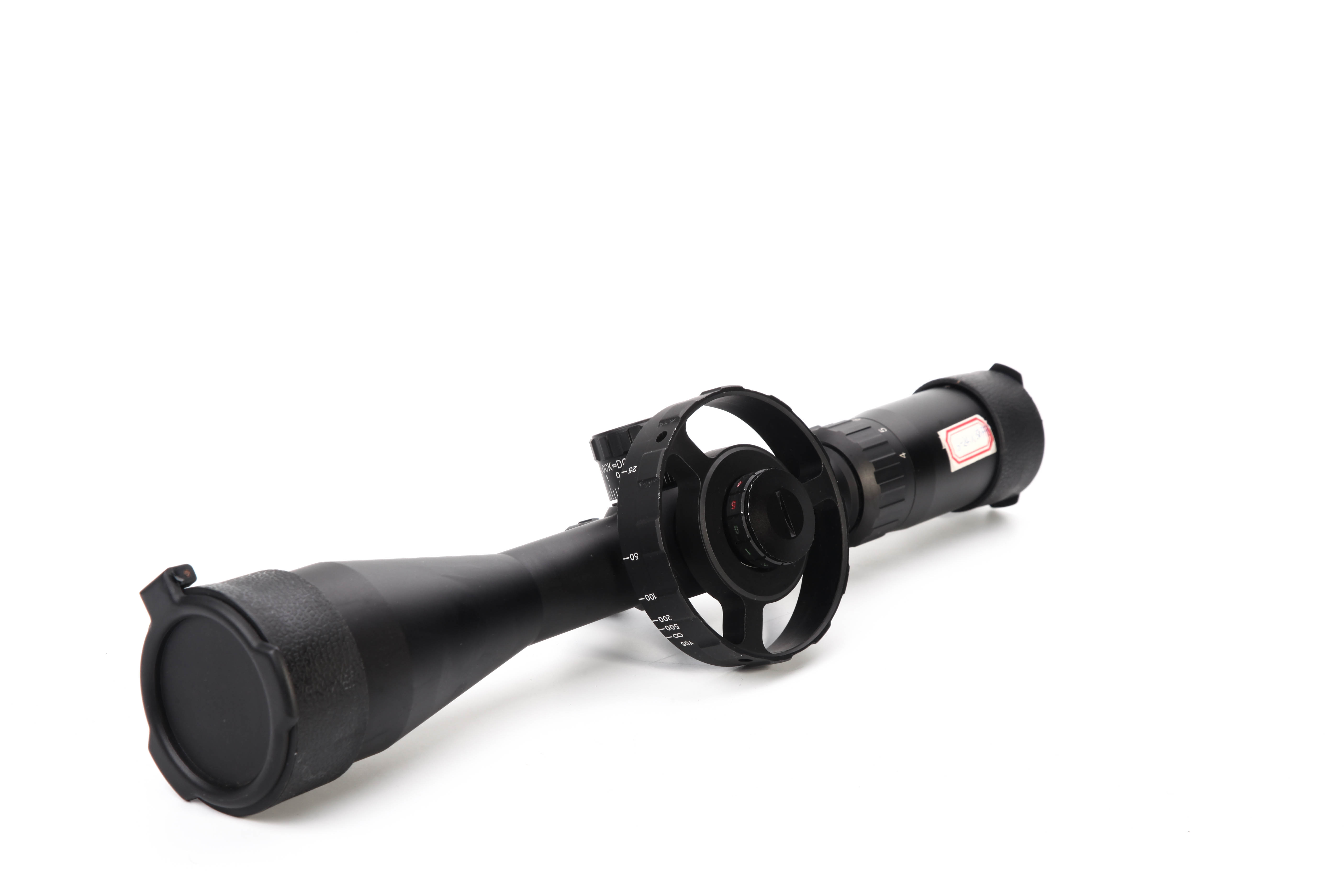
Understanding MOA: The Foundation of Precision Shooting
What Is MOA (Minute of Angle)?
Minute of Angle, or MOA for short, basically measures angles like slices of pie cut into 60 parts. When we talk about precision shooting, this measurement becomes really important because it gives shooters a standard way to figure out where bullets are landing and how to tweak their aim accordingly. Let's say someone is shooting at targets 100 yards away. One MOA works out to around 1.047 inches on paper, which is why scopes are calibrated based on these measurements for adjusting both vertical position (elevation) and horizontal position (windage). What makes MOA so handy is that the math scales predictably. If a shooter moves twice as far from the target, those same MOA adjustments just need to be doubled in size to get similar results. That kind of consistency helps marksmen stay accurate even when conditions change during competitions or hunting trips.
The Mathematical Basis of MOA and Its Practical Implications
MOA comes from basic trigonometry principles. One MOA equals roughly 2 π divided by 21,600 radians. When we look at real-world measurements, at 100 yards or 3,600 inches, one MOA works out to approximately 1.047 inches on target. Since MOA measures angles rather than fixed distances, what it actually covers gets bigger as range increases. For example, at 500 yards away, that same single MOA measurement spans around 5.235 inches instead. This consistent relationship between angle and distance makes all the difference for calculating bullet trajectories accurately over different shooting ranges. According to research published last year in ballistics journals, marksmen who grasp how MOA works tend to make fewer mistakes when lining up shots in actual field situations, cutting down their errors by nearly two-thirds compared to those without this knowledge.
How MOA Scales with Distance: From 100 to 1000 Yards
MOA scales linearly, simplifying long-range adjustments:
- 100 yards: 1 MOA = 1.047 inches
- 500 yards: 1 MOA = 5.235 inches
- 1,000 yards: 1 MOA = 10.47 inches
For example, correcting a 10-inch deviation at 600 yards requires roughly 1.59 MOA (10 ÷ 6.282). This direct relationship ensures reliable scope performance when dialing or holding for shot placement.
Formulas for Calculating MOA Adjustments and Clicks
Use the core formula:
Target Adjustment (MOA) = Deviation in Inches ÷ (MOA in Inches at Distance)
To convert MOA to clicks on a 1/4 MOA per-click scope:
Clicks Needed = Required MOA × 4
If a bullet hits 8 inches low at 400 yards (where 1 MOA = 4.188 inches), the correction is 8 ÷ 4.188 ≈ 1.91 MOA. With 1/4 MOA clicks, that's 7.64 clicks—typically rounded to 8. These calculations bridge theoretical math with real-world accuracy.
MOA Scope Adjustments: Turrets, Click Values, and Real-World Use
How Scope Turrets Translate MOA into Mechanical Adjustments
Modern rifle scopes use calibrated turrets to convert MOA into precise point-of-impact shifts. Each click on a 1/4 MOA turret moves the reticle by 0.262 inches at 100 yards (1.047 ÷ 4). High-end tactical models employ dual-spring mechanisms to maintain repeatability, with tracking accuracy within 0.05 MOA—critical for maintaining zero after repeated adjustments.
Common Click Values: 1/4 MOA vs. 1/2 MOA Explained
| Click Value | Adjustment at 100 Yards | Best Use Cases |
|---|---|---|
| 1/4 MOA | 0.262 | Precision long-range shooting |
| 1/2 MOA | 0.524 | Hunting & rapid field adjustments |
The 1/4 MOA system dominates competitive disciplines due to its fine control—12 clicks yield exactly 3 MOA, ideal for subtle wind or elevation changes. Half-MOA turrets are favored by hunters needing fast, intuitive adjustments within 400 yards.
Practical Application: Elevation and Windage Corrections Using MOA
Engaging a target at 600 yards with a .308 Winchester and facing a 10 mph crosswind? Expect ~2.25 MOA of wind drift. Combine ballistic data with turret dials or holdovers using your reticle. Field tests show experienced shooters correct elevation 27% faster with MOA than MIL in high-pressure scenarios.
Zeroing Your Rifle: Calculating MOA Shifts and Fine-Tuning at Range
To zero a rifle printing 8” low at 100 yards using a 1/4 MOA scope:
1. Calculate needed adjustment: 8” ÷ 1.047”/MOA ≈ 7.64 MOA
2. Convert to clicks: 7.64 × 4 = 30.56 ≈ round to 31 clicks
3. Confirm with 3-round groups, then fine-tune with 1–2 additional clicks for sub-0.25 MOA precision.
Applying MOA in Long-Range Shooting: Drop, Drift, and Field Corrections
Compensating for Bullet Drop Using MOA-Based Elevation Adjustments
Bullet drop accelerates with distance—a 168-grain .308 round drops about 47 inches at 500 yards (PMA Ballistics 2023). Since 1 MOA = 5.24 inches at that range, the required elevation correction is 47 ÷ 5.24 ≈ 9 MOA. On a 1/4 MOA scope, this translates to 36 clicks (9 × 4), aligning the trajectory with the aiming point.
Correcting Wind Drift with MOA Windage Estimations
A 10 mph crosswind pushes the same .308 round approximately 20 inches off target at 500 yards. Converting to MOA: 20 ÷ 5.24 ≈ 3.8 MOA. This can be dialed via 15 clicks (3.8 × 4) on a 1/4 MOA turret or held using reticle marks. The MOA-to-inches ratio offers a universal method for wind compensation across calibers and conditions.
Making On-the-Fly Shooting Corrections Across Distances
When time or environment limits turret use, MOA reticles enable immediate holds:
- Apply a 2 MOA holdover for a sudden 200-yard shot
- Use a 0.5 MOA offset for light gusts
This capability is vital in dynamic environments like PRS matches or hunting scenarios with unpredictable engagement ranges.
Case Study: Engaging a 600-Yard Target Using MOA Adjustments
For a 600-yard steel target:
- Total drop: 72" ≈ 72 ÷ 6.28 (1 MOA at 600 yds) ≈ 11.5 MOA elevation
- Dial 46 clicks (11.5 × 4) on a 1/4 MOA turret
- Account for 5 mph wind drift (~14") ≈ 14 ÷ 6.28 ≈ 2.2 MOA windage
- Hold 2 MOA into the wind using reticle hash marks
Result: First-round hit probability improves by 63% compared to uncalibrated guessing (Precision Rifle Journal 2022).
By integrating MOA-based calculations with scope mechanics, shooters achieve repeatable precision under variable field conditions.
MOA Reticles: Types, Features, and Tactical Advantages
MOA reticles enhance precision by embedding angular references directly into the optic. These markings streamline ranging, holdovers, and windage corrections—key advantages for competitive shooters, hunters, and tactical operators alike.
How MOA Markings Enhance Reticle Functionality
MOA-based reticles feature hash marks spaced at known intervals (e.g., 1 MOA apart), allowing adjustments without touching turrets. When matched with MOA-calibrated turrets, they create a cohesive system. For instance, a 0.5 MOA mark provides a 2-inch holdoff at 400 yards, enabling quick responses to moving targets or shifting wind.
Popular MOA-Compatible Reticles: Duplex, BDC, and Custom Grids
- Duplex: Thick outer wires taper to thin center lines, ideal for fast acquisition in low-light hunting situations
- Bullet Drop Compensator (BDC): Pre-marked dots correspond to bullet drop at set distances, often calibrated for common cartridges
- Custom Grids: Multi-stadia designs with full MOA spacing for elevation and windage, suited for extended-range precision work
Using MOA Reticles for Holdover and Range Estimation
MOA reticles support rangefinding through subtension: if a 36-inch target spans 3 MOA in the reticle, it’s approximately 1,200 yards away (36 ÷ 3 = 12 × 100). Paired with ballistic data, this technique enables accurate adjustments without relying on external tools.
MOA vs. MIL Reticles: Market Trends and Industry Preferences
MIL systems are still the norm in military applications, but things are changing fast in the hunting world. According to a recent survey from Precision Optics in 2023, around two-thirds of all long-range hunting scopes now come with MOA reticles instead. Most North American shooters find MOA easier to work with since it fits right into our familiar imperial measurement system. The market has responded with hybrid options too these days. Some scopes combine MOA adjustable turrets with MIL based reticles, giving folks flexibility depending on their shooting style and experience level. Manufacturers seem to be catching onto the fact that not everyone thinks in the same terms when it comes to rangefinding and adjustments.
For shooters working in yards and inches, MOA reticles minimize mental math and accelerate decision-making under pressure.
Selecting the Right Scope Based on MOA Specifications
Choosing the right MOA-optimized scope means matching technical specs to your intended use. Whether you're competing, hunting, or operating tactically, key factors include turret precision, reticle design, and environmental resilience.
Matching MOA Adjustments and Reticles to Your Shooting Needs
Long-range competitors benefit from 1/4 MOA turrets paired with custom-grid reticles for exact hold points. Hunters often prefer duplex or BDC reticles with 1/2 MOA clicks for simplicity and speed. Tactical users prioritize locking turrets and illuminated reticles to maintain MOA accuracy in low-light or high-stress conditions.
Key Considerations When Evaluating Scopes for MOA Precision
Verify turret tracking with a collimator; a 2023 field study showed scopes with over 95% tracking consistency reduced vertical stringing by 22% at 500 yards. Parallax adjustment, premium lens coatings, and IPX7-rated waterproofing help preserve MOA-level accuracy across environments. Zero-stop turrets allow rapid return to zero after long-range engagements.
Top MOA-Optimized Scopes for Hunting, Target Shooting, and Tactical Use
While specific models vary, look for hunting scopes with cartridge-specific BDC reticles, target models with 30mm main tubes and 1/4 MOA clicks, and tactical options offering hybrid MIL-MOA reticles for versatile wind holds. Always validate reticle subtensions against your personal ballistic data to ensure true MOA compatibility.
FAQ
What is MOA used for in shooting?
MOA (Minute of Angle) is a measurement of angle used in shooting to adjust for bullet trajectory concerning elevation and windage, ensuring accuracy over various distances.
How do you calculate MOA adjustments?
MOA adjustments are calculated using the formula: Target Adjustment (MOA) = Deviation in Inches ÷ (MOA in Inches at Distance). For scopes, use: Clicks Needed = Required MOA × 4 for 1/4 MOA per-click scopes.
What is the advantage of MOA over MIL reticles?
MOA is often easier for shooters familiar with the imperial system (yards, inches), providing more intuitive adjustments. MIL is preferred in military applications due to its compatibility with the metric system.
How does distance affect MOA adjustments?
As distance increases, the area one MOA covers also increases, requiring larger adjustments for the same angular displacement. This scalability allows for consistent accuracy regardless of range.
Table of Contents
- Understanding MOA: The Foundation of Precision Shooting
- MOA Scope Adjustments: Turrets, Click Values, and Real-World Use
- Applying MOA in Long-Range Shooting: Drop, Drift, and Field Corrections
- MOA Reticles: Types, Features, and Tactical Advantages
- Selecting the Right Scope Based on MOA Specifications
