 EN
EN

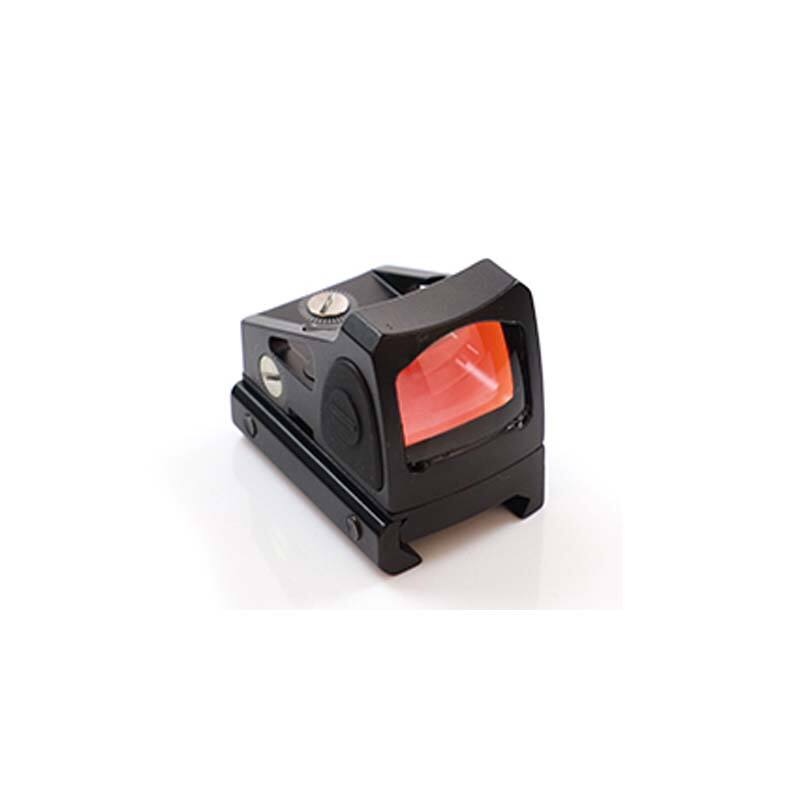
How Red Dot Sights Work: Technology Behind the Reticle
Understanding LED and Collimation: Creating the Red Dot Image
Most modern red dot sights create their aiming point through an LED light source. Iron sights need careful alignment between front and rear parts, but red dots work differently. They produce what's called a collimated reticle where light waves run parallel to each other, which means the dot stays focused no matter where the eye is positioned. From what we know about optics engineering, this setup lets shooters maintain accurate targeting without constantly adjusting focus. The device usually has a curved lens, sometimes with anti-reflective coating, that bounces and focuses the LED light into a clear, sharp dot that resists parallax issues when the shooter looks through it.
Reflection, Lens Coatings, and Parallax Minimization
An angled beam splitter inside the sight reflects the LED-generated dot toward the user’s eye while allowing ambient light to pass through for a clear view of the target. High-performance lens coatings enhance functionality:
- Anti-reflective treatments (multicoating, dielectric layers) boost light transmission up to 98%, improving clarity in low-light conditions
-
Hydrophobic coatings repel water and resist fogging, preserving sight picture integrity
Parallax error—the apparent movement of the reticle relative to the target when the eye shifts—is minimized through precision lens curvature and collimation. Top-tier models achieve less than 2 MOA of parallax shift at 100 yards, ensuring reliable accuracy across varied shooting positions.
Infinite Eye Relief and Its Advantage for Fast Target Acquisition
Red dot optics have this thing called infinite eye relief which basically means shooters can see the crosshair no matter where they put their heads relative to the scope. Unlike traditional magnifying scopes that demand perfect eye placement, red dots cut out all that fuss. Shooters don't get stuck with tunnel vision anymore and can keep both eyes open while aiming. What does this actually mean? Faster target acquisition times and better situational awareness. These are real world benefits when dealing with close quarter confrontations or fast moving targets where fractions of a second make all the difference between hitting what matters and missing entirely.
Key Advantages of Red Dot Sighting for Shooters
Faster Target Acquisition in Dynamic and Close-Quarters Environments
Shooting tests show that red dot sights help shooters lock onto targets about 56 percent quicker compared to traditional iron sights when things get close up, per research from the Firearms Training Institute last year. The way these optics work is pretty clever actually they put the aiming point right at the same distance as whatever the shooter is looking at, so there's no need to constantly adjust focus between different parts of the sight picture. For folks dealing with real world scenarios such as defending their homes or participating in tactical missions, this speed difference matters a lot. When every second counts, being able to engage threats faster often makes all the difference between success and failure.
Enhanced Accuracy with Intuitive Aiming at Short to Mid-Range Distances
Simple single point reticles help shooters aim faster without thinking too much about it, which means better accuracy when shooting at targets anywhere between 25 and 100 yards out. Some tests done back in 2022 showed folks who used red dot sights had their shots cluster together about 22 percent closer together than those relying on older style scopes during fast fire exercises. Why does this happen? Well, there's less stuff competing for attention in the eye, plus these newer reflex sights handle parallax issues much better than what we've seen before. Makes sense really, since our eyes don't have to work so hard adjusting focus all the time.
Improved Situational Awareness Using Both-Eyes-Open Shooting Techniques
Red dots are ideal for both-eyes-open shooting, which preserves natural peripheral vision—up to 160°—allowing users to detect secondary threats and maintain environmental awareness. Law enforcement agencies report 38% faster threat identification when officers use this technique with red dot-equipped firearms, making it especially valuable in defensive and urban scenarios.
Accessibility for Beginners and Intermediate Shooters
Red dot sights make things much easier for people just starting out with firearms because they have unlimited eye relief and are super simple to operate. According to a recent study from the Optics Testing Lab in 2023, around two thirds of folks who bought their first gun went for red dot systems instead of traditional iron sights. They found these optics helped them get better faster and feel more confident about hitting what they aimed at. Plus, there's almost nothing complicated about setting one up compared to other options. No messing with fancy reticles or adjusting diopters means these devices work great for anyone looking for something quick to install and ready to go without all the hassle.
Types of Red Dot Sights: Choosing the Right One
Open Reflex vs Tube-Style Red Dots: Clarity, Durability, and Size Trade-offs
The open reflex sight has that exposed emitter window which makes them really light to carry around, weighing between 1.5 to 3 ounces, plus they give shooters a pretty broad field of view at around 30 to 40 degrees. That's why folks often pick these for quick shooting situations at close range. Tube style red dot sights work differently though. They put all the optical components inside a tough casing that can take a real beating from heavy recoil. Some recent tests back in 2023 found that these tube models stayed on target about 23 percent longer even after lots of shots were fired. On the downside, they do weigh more, somewhere between 5 and 8 ounces, and their field of view narrows down to about 20 to 25 degrees. Another thing worth mentioning is how well they handle harsh conditions. Most tube style units come with IPX8 rating meaning they can survive being submerged, while the open models usually only have IPX6 protection against splashes rather than full waterproofing.
| Feature | Open Reflex | Tube-Style |
|---|---|---|
| Weight | 1.5—3 oz | 5—8 oz |
| Field of View | 30°—40° | 20°—25° |
| Waterproof Rating | IPX6 (splash-proof) | IPX8 (submersible) |
Holographic Sights Compared to Traditional Red Dot Sighting Systems
Holographic sights work by using laser diffraction to create a floating reticle image, which is quite different from regular LED red dot systems. These sights have almost no parallax issues and keep working even when the front lens gets cracked or damaged something that matters a lot during intense field operations. The downside though? They eat up batteries much faster than other options. Some tests show they need around twice as much power as standard optics. That means changing batteries more often, which can be a pain during long missions. Still, many military teams prefer them because of how accurate they are, especially under pressure situations where quick target acquisition counts. Most shooters report being able to hit targets within half a minute of angle accuracy, making them worth the extra bulk and higher power demands for those who need reliability in combat scenarios.
Common Misconceptions: "Red Dot" vs "Reflex Sight"
People often mix up the terms "reflex sight" and "red dot," but there's actually a difference worth knowing. Reflex sight covers all those no-magnification aiming tools that project a dot or image onto the target - think both regular red dots with LEDs and those fancy holographic sights too. Real red dots work differently though; they use something called collimated light from an LED source, according to industry standards guides. Recent research from 2024 showed pretty shocking results: nearly two thirds of shooters get confused between these different types. This confusion matters because it affects what people expect when buying gear. Many end up disappointed later when their new optic doesn't perform as hoped, especially regarding battery longevity, how steady the aiming point stays, and how well it works during intense situations.
Real-World Applications of Red Dot Sighting
Tactical use: Why military and law enforcement trust red dots
Most military and police forces now equip their teams with red dot sights because these optics really make a difference in how well they perform on the job. According to research published in 2022 looking at ballistic responses, soldiers who used red dots were able to take down threats about half a second quicker compared to traditional iron sights when conditions were dim. What makes red dots so useful is that shooters don't need to position their heads just right to get a good shot off. This means officers can switch between targets much faster without losing track of what's happening around them. That kind of flexibility matters a lot during tense situations like building breaches or responding to active shooters where every second counts.
Competitive shooting: Gaining speed in transitions and stage performance
For shooters competing in practical disciplines like USPSA and IDPA, red dot optics give a real advantage when facing multiple targets on a course. Looking at results from recent IPSC competitions in 2023 shows something interesting too. Shooters who had reflex sights on their pistols were clocking around 25 percent quicker transitions between targets than folks sticking with traditional aperture sights. What makes these red dots so helpful? The infinite eye relief lets competitors maintain sight picture while moving around the stage. This means they can watch where their shots hit the steel targets as they work through each position, which helps them adjust faster and complete stages more efficiently overall.
Hunting scenarios where red dot sighting improves response time
Hunters who chase fast moving targets such as wild boars or those tricky upland birds find that red dot sights really cut down on the lag time from regular scopes. There's no more fighting with parallax issues or wasting precious seconds trying to get back on target after the shot. When things get thick in the brush and shots happen anywhere between 15 to 50 yards away, folks using these optics are seeing around 34% fewer missed chances according to field reports. What makes them stand out is how easy they make it to track critters darting side to side across the field of view. Even after taking a shot, hunters can stay locked onto their prey for that second opportunity without having to constantly readjust their aim.
Home defense and everyday carry (EDC): Faster reaction in critical moments
Regular folks who carry guns for protection really appreciate how easy and fast red dot sights are during those intense moments when someone's safety is on the line. Magnifying scopes actually limit what shooters can see around them, while red dots keep everything visible in front of the gun. This matters a lot when trying to spot dangers inside buildings where space is limited. Some research done last year looked at people learning to shoot found something interesting too. New shooters practicing with handguns fitted with red dots were hitting targets as accurately as trained instructors after only about twenty rounds at seven yards away. That kind of quick progress shows why these sights have become so popular among everyday defenders looking to get good results without spending ages at the range.
FAQ Section
What is the main advantage of using a red dot sight?
The primary benefit of using a red dot sight is faster target acquisition. These sights help shooters lock onto targets more quickly and with better accuracy, especially in dynamic and close-quarters situations.
Are red dot sights suitable for beginners?
Yes, red dot sights are particularly suitable for beginners due to their simplicity of use and unlimited eye relief. They help new shooters build confidence and improve accuracy more quickly compared to traditional iron sights.
What's the difference between reflex sight and red dot sight?
While the terms are often used interchangeably, a reflex sight encompasses all non-magnification aiming tools that project an image onto a target, including red dots and holographic sights. Red dot sights specifically use collimated light from an LED source.
What type of red dot sight is better for hunting?
For hunting, many find open reflex sights suitable due to their lightweight nature and wide field of view. However, tube-style red dot sights offer better durability and weather resistance, which can be advantageous in rugged outdoor conditions.
