 EN
EN

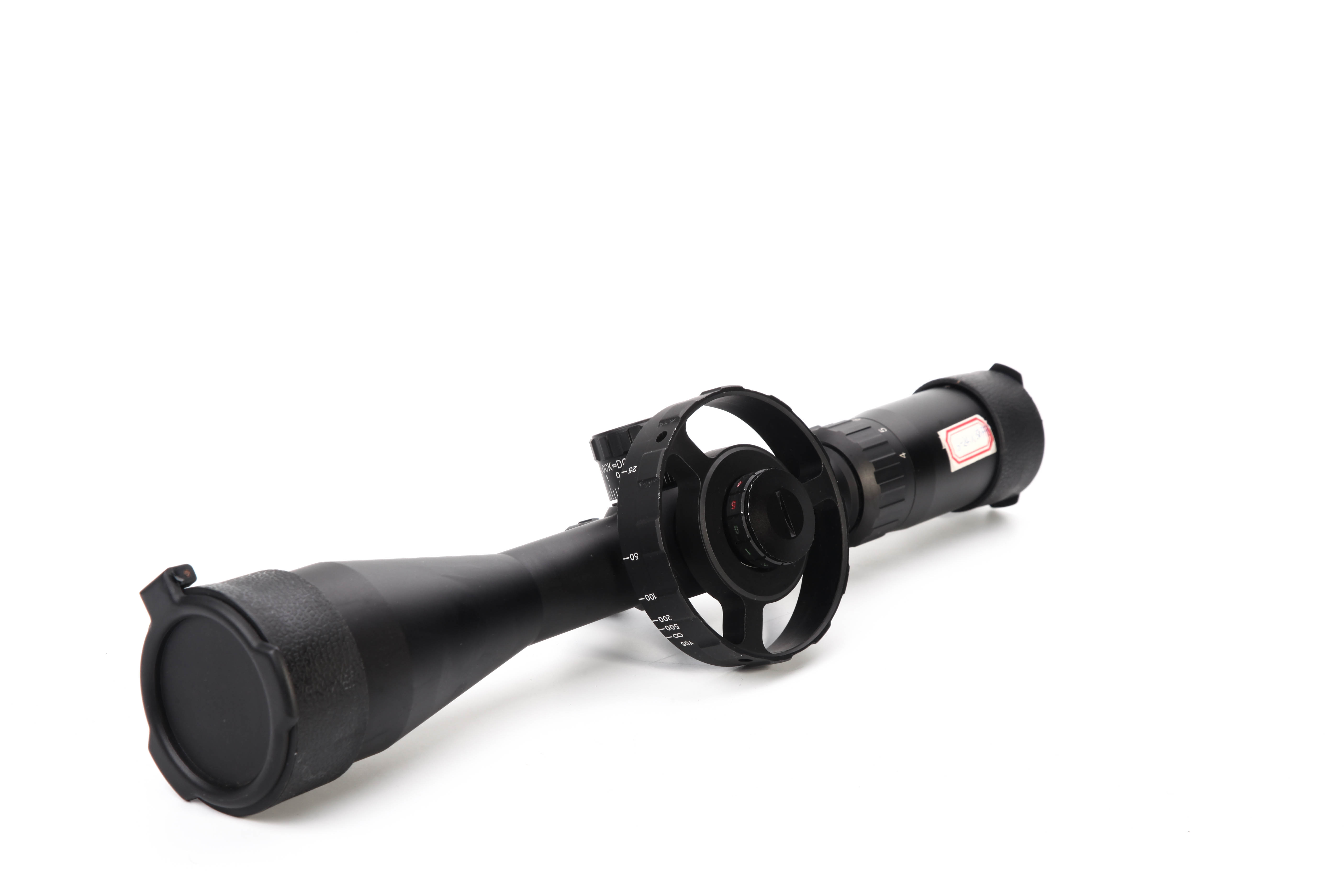
What Is Magnification in Rifle Scopes?
Defining Magnification and Its Role in Optical Performance
When we talk about magnification in rifle scopes, we're basically talking about how big something looks through the scope compared to what our eyes see normally. Take a 4x scope for instance, things look like they're right about four times closer than they actually are. The tradeoff here is pretty straightforward though. Higher magnification definitely helps see finer details, but at the same time it narrows down what we can actually see around us. Looking at recent data from Outdoor Life's 2025 report on rifle scopes, most folks (around two thirds) seem to prefer scopes with balanced magnification settings. They don't want to sacrifice their ability to spot movement or changes in their surroundings when shooting in real world conditions where things aren't always static.
How Rifle Scope Magnification Affects Target Clarity
When it comes to spotting those far away targets, higher magnification definitely helps shooters get better accuracy at longer distances. But there's a catch with going too high on the zoom power, say anything over 20x. The scope starts picking up every little shake from the shooter's hands plus all sorts of weird air turbulence effects that mess with the image quality. Most hunters find that scopes with around 6 to 10 times magnification work really well for typical deer hunting ranges. These settings keep the crosshairs stable enough during aiming while still letting them see important features such as where the antlers are positioned or exactly where to place the shot for clean harvests.
The Meaning of Scope Numbers (e.g., 3-9Ãâ40) Explained
Scope markings like "3-9Ãâ40" denote two key specs:
- 3-9x: Adjustable magnification range (3x to 9x zoom)
- 40: Objective lens diameter in millimeters, governing light intake
A larger objective lens (e.g., 50mm vs. 40mm) improves low-light clarity but adds weight. The 3-9x configuration remains popular for its versatility, accommodating both 100-yard varmint shots and 300-yard big-game engagements. Modern scopes often pair these specs with multi-coated optics to minimize glare and maximize light transmission.
Key Trade-offs at Different Magnifications
| Magnification | Field of View* | Stability Sensitivity | Ideal Use Case |
|---|---|---|---|
| 1-4x | 35â50 ft | Low | Close-range, fast target acquisition |
| 4-8x | 20â30 ft | Moderate | Mid-range hunting (200â400 yds) |
| 8-12x | 10â18 ft | High | Precision shooting (500+ yds) |
| *Measured at 100 yards |
This table illustrates why variable scopes dominate modern marketsâthey adapt to diverse shooting contexts while mitigating optical compromises.
Fixed vs Variable Magnification: Key Differences and Use Cases
Understanding fixed (e.g., 4x) and variable (e.g., 3-9x, 4-12x) magnification systems
Fixed power scopes stick with one magnification level throughout, say something like 4x, which works best when shooting consistently at similar ranges. The simplicity of these optics tends to make them more dependable in the field. On the other hand, variable power scopes such as those rated 3-9x or 4-12x let shooters adjust their view depending on what they need to hit. A quick turn of that magnification dial can help track targets at close range like 100 yards or farther out at around 400 yards. Most experienced shooters know this adaptability makes all the difference in real world conditions. Recent work in optical design has shown that being able to change focal length really does expand what hunters and marksmen can accomplish across different shooting scenarios.
Pros and cons of fixed magnification for simplicity and durability
Fixed-power scopes excel in three areas:
- Reduced complexity: Fewer internal parts minimize failure points
- Faster target acquisition: No adjustments needed for known distances
- Brighter images: Larger exit pupils at fixed settings improve low-light performance
However, their static magnification limits utility in dynamic scenarios like transitioning from 50-yard brush shots to 300-yard open-field targets.
Advantages of variable magnification for versatility across distances
The real problem shooters face today isn't just hitting targets but dealing with those unexpected distances when they pop up. Take a standard 3-9x scope for example. When dialed down to 3x magnification, it gives about 39 feet of visible area at 100 yards which works great for scanning tight spaces or moving through cover. But crank that same scope up to full power at 9x and suddenly tiny details become much clearer, making those fine tune adjustments possible. Field studies on optics published last year actually back this up, showing that soldiers who had scopes they could adjust on the fly swapped out their gear 74% less often during complex missions involving multiple phases. Makes sense really, since nobody wants to fumble around changing equipment mid-operation.
When to choose fixed vs variable magnification based on shooting application
Select fixed magnification for:
- Sub-200-yard hunting in dense timber
- Competition benchrest shooting at regulated distances
- Training rifles where simplicity reduces user error
Opt for variable systems when:
- Engaging targets from 50-600+ yards
- Using one rifle for varminting and medium-game hunting
- Operating in mixed terrain requiring rapid magnification changes
Durable fixed scopes withstand recoil better in .375 H&H magnum rifles, while premium variables like 5-25x models dominate 1,000-yard precision disciplines where subtle reticle adjustments drive accuracy.
How Magnification Impacts Shooting Performance and Accuracy
Magnification and Effective Shooting Distance: Matching Power to Range
Choosing the right magnification for a rifle scope is all about finding the sweet spot between how far away the target is and what the optics can actually do. Most folks who hunt deer at distances from 100 to 300 yards find that scopes with 3 to 9 times magnification work pretty well. They keep things clear enough on the target without making it hard to see what's going on around them. When we get into long range shooting past 800 yards though, most serious shooters go for something like 15 to 25 times magnification just to make out those tiny targets. But watch out when the magnification gets over 20x because stuff like heat waves (mirage) starts messing with the image quality quite a bit.
Trade-offs: Field of View, Stability, and Sensitivity at Higher Magnifications
Increased magnification inversely impacts critical shooting factors:
| Magnification | Field of View @ 100yds | Stability Threshold | Situation Awareness |
|---|---|---|---|
| 4x | 25 ft | 8.2 MOA | Excellent |
| 12x | 8.3 ft | 2.1 MOA | Moderate |
| 25x | 3.1 ft | 0.7 MOA | Limited |
High magnification amplifies shooter tremorâon average, a 4 mph heart rate vibration translates to 3.5" reticle movement at 100 yards when using 20x zoom.
Light Transmission and Image Brightness Challenges With Increased Zoom
Every magnification doubling reduces light transmission by 42% (Zeiss Conquest V4 testing 2023). Scopes with 50-56mm objective lenses maintain usable brightness up to 18x, while compact 40mm models show noticeable dimming beyond 12x.
Debunking the Myth: Is More Magnification Always Better?
Military sniper data reveals 88% of confirmed hits under 800 yards use â12x magnification. Excessive magnification increases parallax errors, reduces depth of field, and complicates moving target engagement. Modern shooters achieve better practical accuracy by matching magnification to their rifle's mechanical precision limits rather than maximizing zoom capability.
Choosing the Right Magnification for Your Rifle Scope
Best Magnification Ranges for Hunting, Tactical, and Long-Range Shooting
Picking the right magnification means finding scopes that work well for different shooting situations. When it comes to hunting, most folks stick with 1-8x scopes for those shots at distances from around 50 to 300 yards. These scopes help hunters spot game quickly even when moving through thick brush or forested areas. Tactical shooters often go for 1-10x LPVOs instead. These scopes let them switch back and forth between something similar to a red dot sight at 1x magnification and much more detailed views at 10x power. For long range shooting beyond 800 yards out to about 1,200 yards, almost everyone grabs a 5-25x configuration. According to testing done by Outdoor Life in 2025, nearly nine out of ten competitors were using scopes in this range during competitions because they simply offer better visibility of targets and make adjusting for bullet drop easier over such vast distances.
Common Variable Scopes: 1-4x, 1-6x, 3-9x, 5-25x and Their Ideal Uses
Variable scopes solve multiple scenarios with a single optic:
- 1-4x/1-6x: Brush hunting and 3-gun competitions requiring <200-yard rapid shots
- 3-9x: Versatile mid-range hunting scopes (74% of whitetail hunters use this range per 2023 NFWS data)
- 5-25x: Precision target/ELR (Extreme Long Range) systems needing sub-MOA accuracy
High-Magnification Needs: Precision Shooting at 1000 Yards and Beyond
Scopes exceeding 20x magnification demand 50-56mm objective lenses to maintain exit pupil sizes >2.4mmâcritical for resolving .308-caliber bullet holes at 1,000 yards. However, a 2024 University of Ballistics study showed excessive magnification (30x+) reduces hit probability by 22% in wind over 10mph due to exaggerated mirage effects.
Balancing Flexibility and Precision in Magnification Selection
Modern shooters increasingly adopt 2.5-15x and 3-18x scopes, combining 88% of a 5-25x scope's top-end magnification with 3x low-end practicality. This trend reflects growing preference for adaptable optics that perform well across varied distances without sacrificing optical resolution.
First Focal Plane vs Second Focal Plane: Reticle Behavior Across Magnification
How FFP and SFP Reticles Scale With Magnification Changes
The difference between First Focal Plane (FFP) and Second Focal Plane (SFP) reticles becomes apparent when adjusting magnification settings. With FFP optics, everything scales together as we zoom in or out. The hash marks stay consistent across different magnifications, so what works at low power still works at high power. That's pretty handy for hunters who need reliable holdovers regardless of their zoom level. On the other hand, SFP scopes work differently. The reticle stays the same size while the image changes around it. This means those fancy Mil-Dot or BDC markings on the crosshair? They'll only give accurate measurements at one particular magnification setting, usually the highest power available. Take a typical 3-9x SFP scope for instance. Those windage adjustment marks are probably going to be spot on at 9x magnification, but not so much at 3x where most folks actually shoot.
| Characteristic | FFP | SFP |
|---|---|---|
| Reticle Scaling | Grows/shrinks with magnification | Fixed size regardless of zoom |
| Subtension Accuracy | Valid at all magnification levels | Accurate only at preset magnification |
| Ideal Use Case | Long-range tactical or competitive | Hunting or mid-range applications |
Why First Focal Plane Is Critical for Accurate Holdovers at Any Zoom Level
The dynamic scaling feature of First Focal Plane optics means shooters get reliable holdover corrections without needing to recalibrate their scope settings. That's pretty handy when taking shots at different ranges during a hunt or competition. With FFP scopes, hunters and marksmen can adjust for elevation and windage at lower magnifications like 6x just as accurately as they would at higher power settings around 18x. Things are quite different with Second Focal Plane systems though. When someone forgets how the reticle scales with magnification changes, they might end up missing their target by more than 2 MOA vertically if they're shooting at anything other than the calibrated zoom level. The difference matters a lot in real world shooting situations.
Practical Impact of Reticle Placement on Ranging and Targeting
First focal plane (FFP) scopes make it easier to range moving targets or those at unknown distances because the reticle stays the same size regardless of magnification settings. Shooters don't have to do complicated calculations in their head when adjusting for distance. With second focal plane (SFP) scopes though, hunters need to stick with whatever magnification setting works best or they end up having to figure out new holdover points on the fly, which gets tricky during intense situations. The upside to SFP is that the reticle remains large enough to see clearly even when zoomed out, so many folks actually prefer them for quick action hunts where grabbing the shot matters more than fine tuning every detail.
FAQ
What does 4x magnification mean in a rifle scope?
4x magnification in a rifle scope means that the target will appear four times closer through the scope than it does to the naked eye.
Why might higher magnification not always be better?
Higher magnification can reduce the field of view, amplify minor movements, and cause image distortion such as mirage effects, particularly at magnifications over 20x.
What is the difference between FFP and SFP reticles?
FFP reticles scale with magnification, keeping hash marks accurate at any zoom level, while SFP reticles remain the same size, making them accurate only at a specific magnification.
How does objective lens size impact rifle scope performance?
Larger objective lenses (e.g., 50mm) can gather more light, providing better clarity in low-light conditions, but can also add weight to the scope.
What magnification is ideal for deer hunting?
For deer hunting, scopes with 6 to 10x magnification are typically recommended as they balance detail visibility and target stability.
